How I Get AI to Stop Rambling
AI answers were becoming a chore to read. Adding “use ASD-STE100” to my prompts helped cut the clutter. Here’s the difference it made in my finance work.

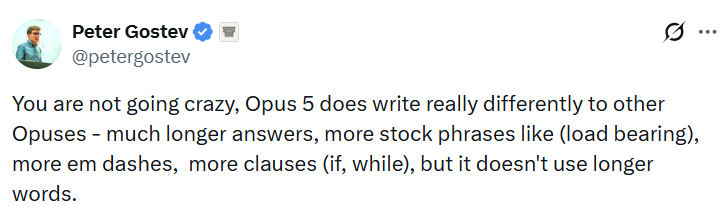
I started to feel overwhelmed reading AI answers and documents, particularly from Opus 5 (the model that loves to talk).
Then I stumbled on an article from Claude pro Ruben Hassid at 'How to AI' about how he "de-slops" AI.
It's the best fix I've found to get AI to get to the point: "use ASD-STE100"
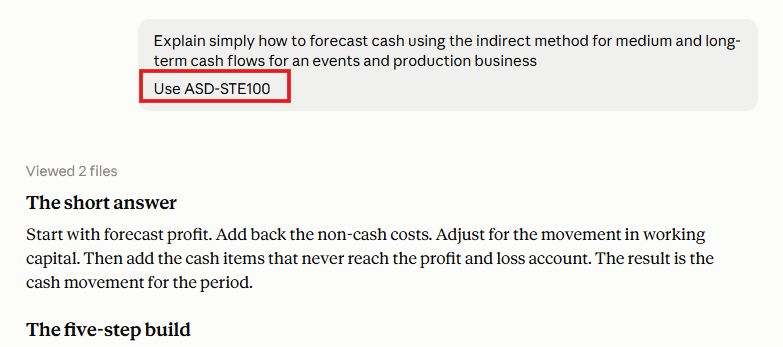
I add it to most of my prompts now. Like Ruben, I've found it just helps avoid the clutter that most models spew out so I can get to the point without the B.S.
What is it?
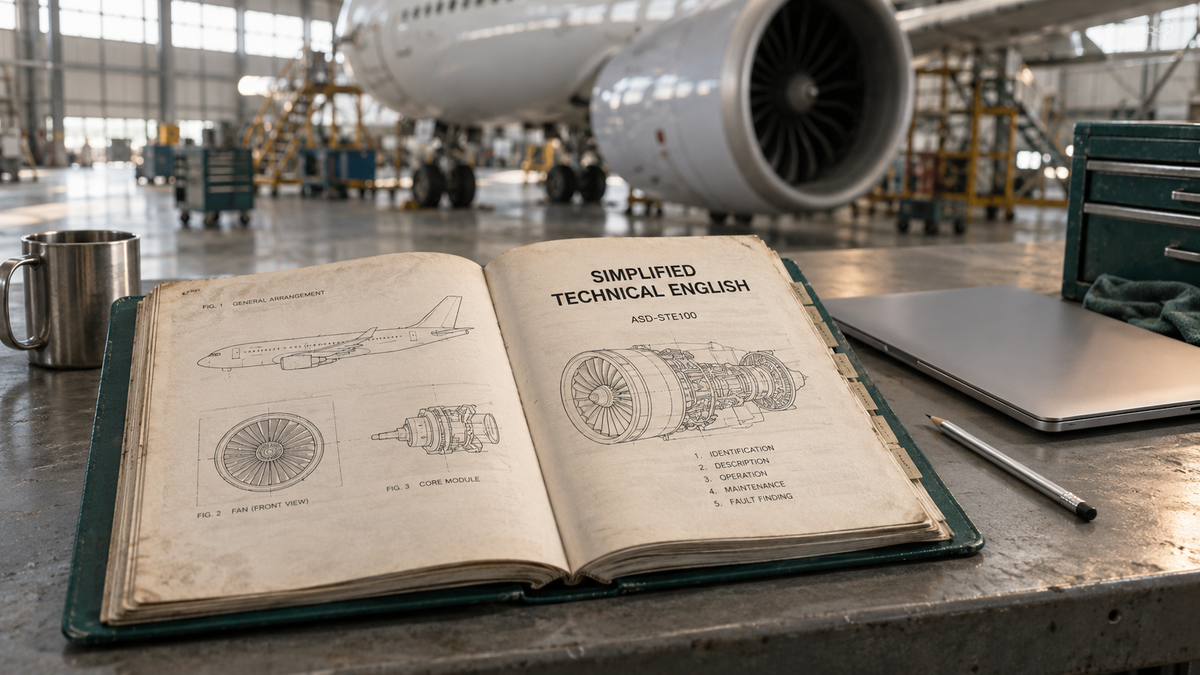
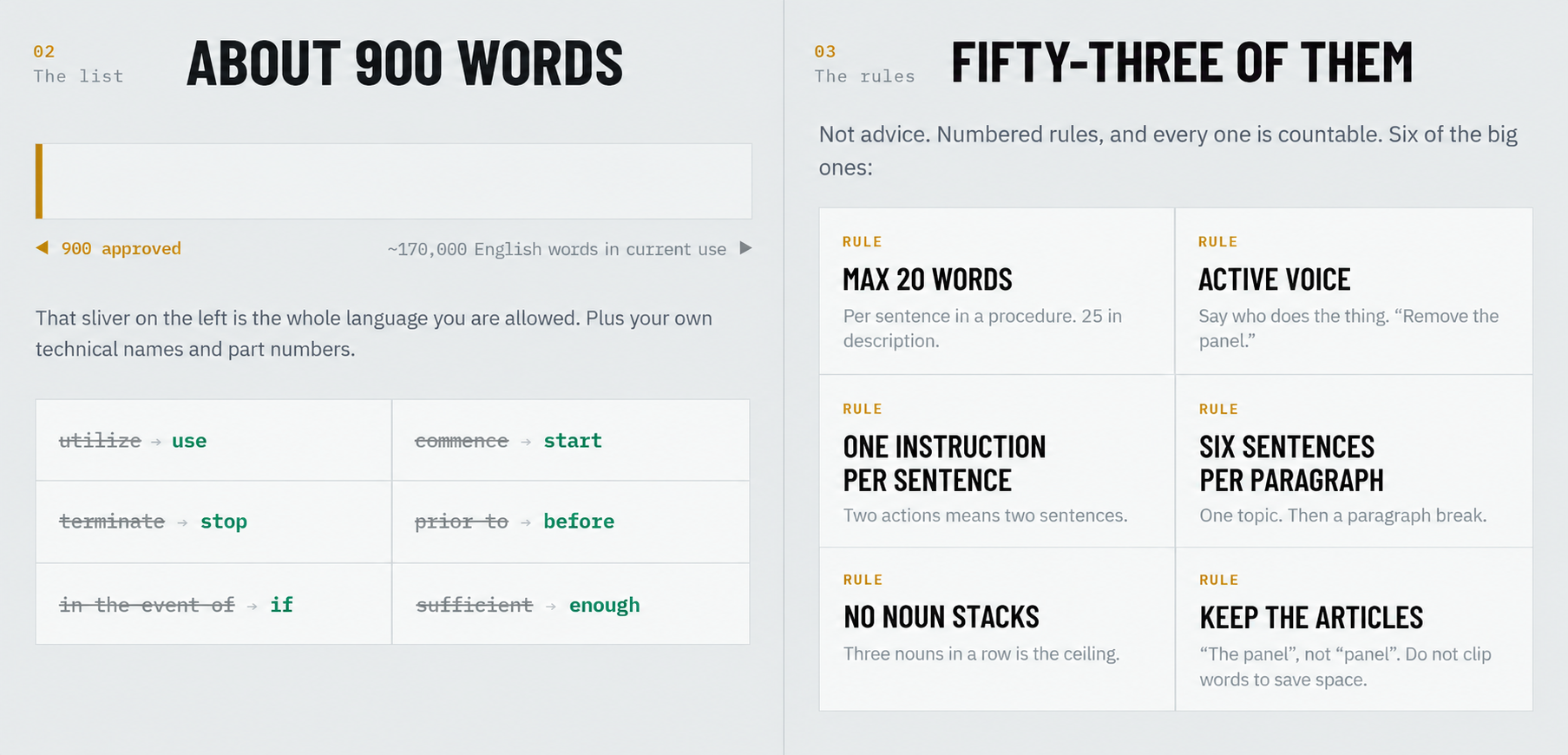
It's a simplified English writing standard. In the 1980's aircraft manufacturers wanted to make maintenance manuals easier to understand.
They basically made a playbook to make English more useful by capping it.
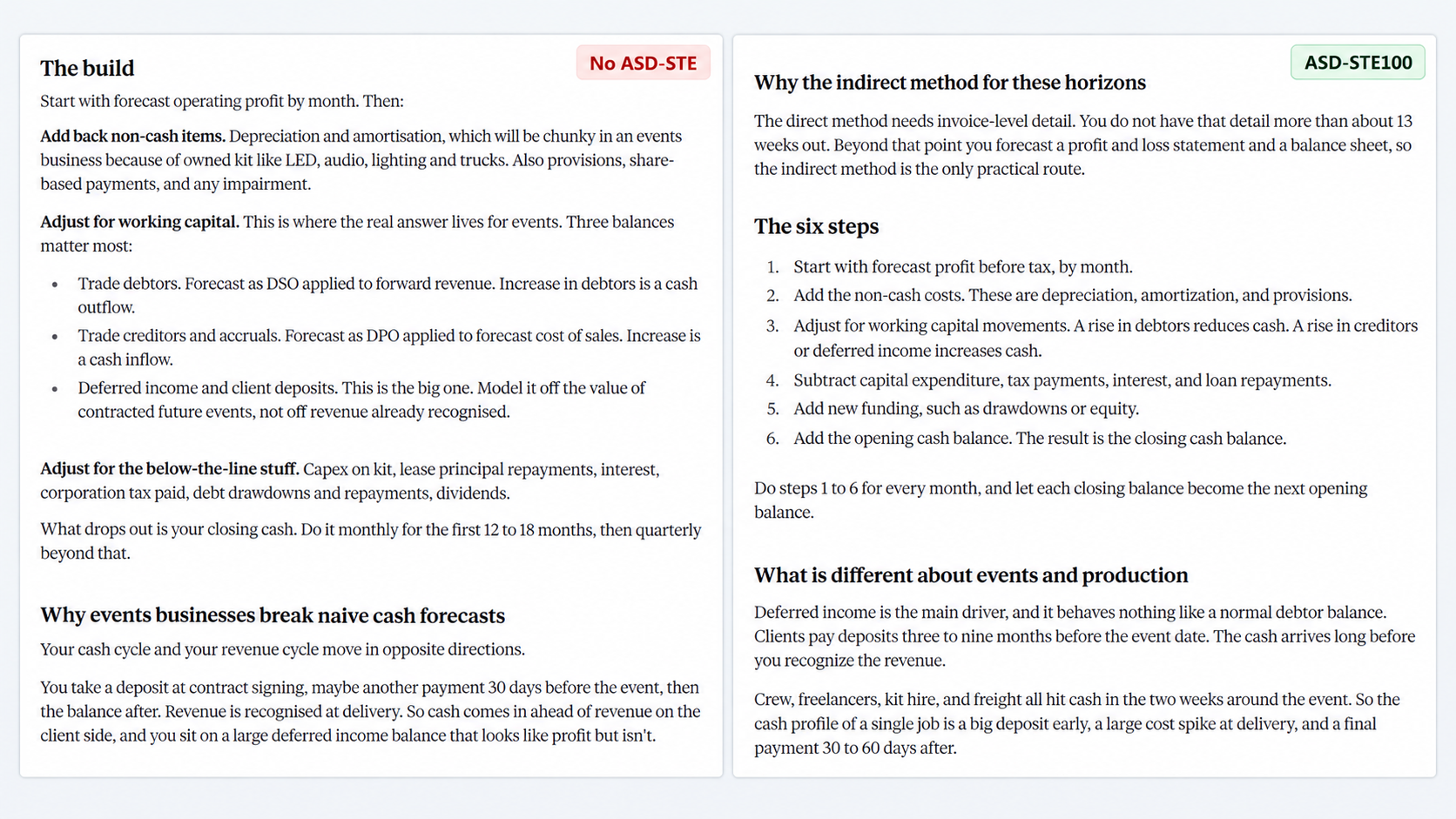
You can see the difference below from the prompt above about indirect cash flows:
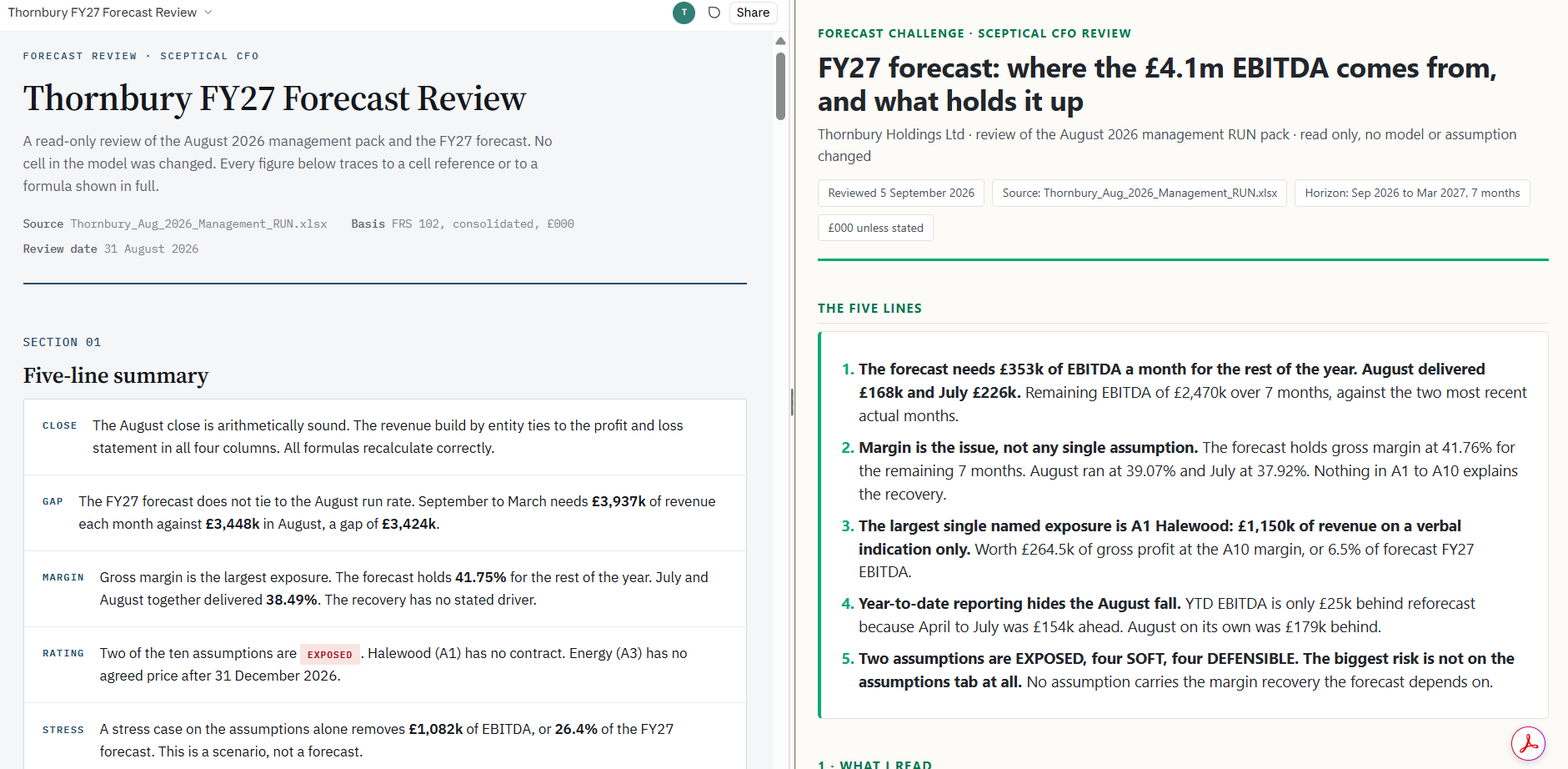
Another example: I ran a prompt to review forecast assumptions, one where I included "use ASD-STE100" and the other where I didn’t:
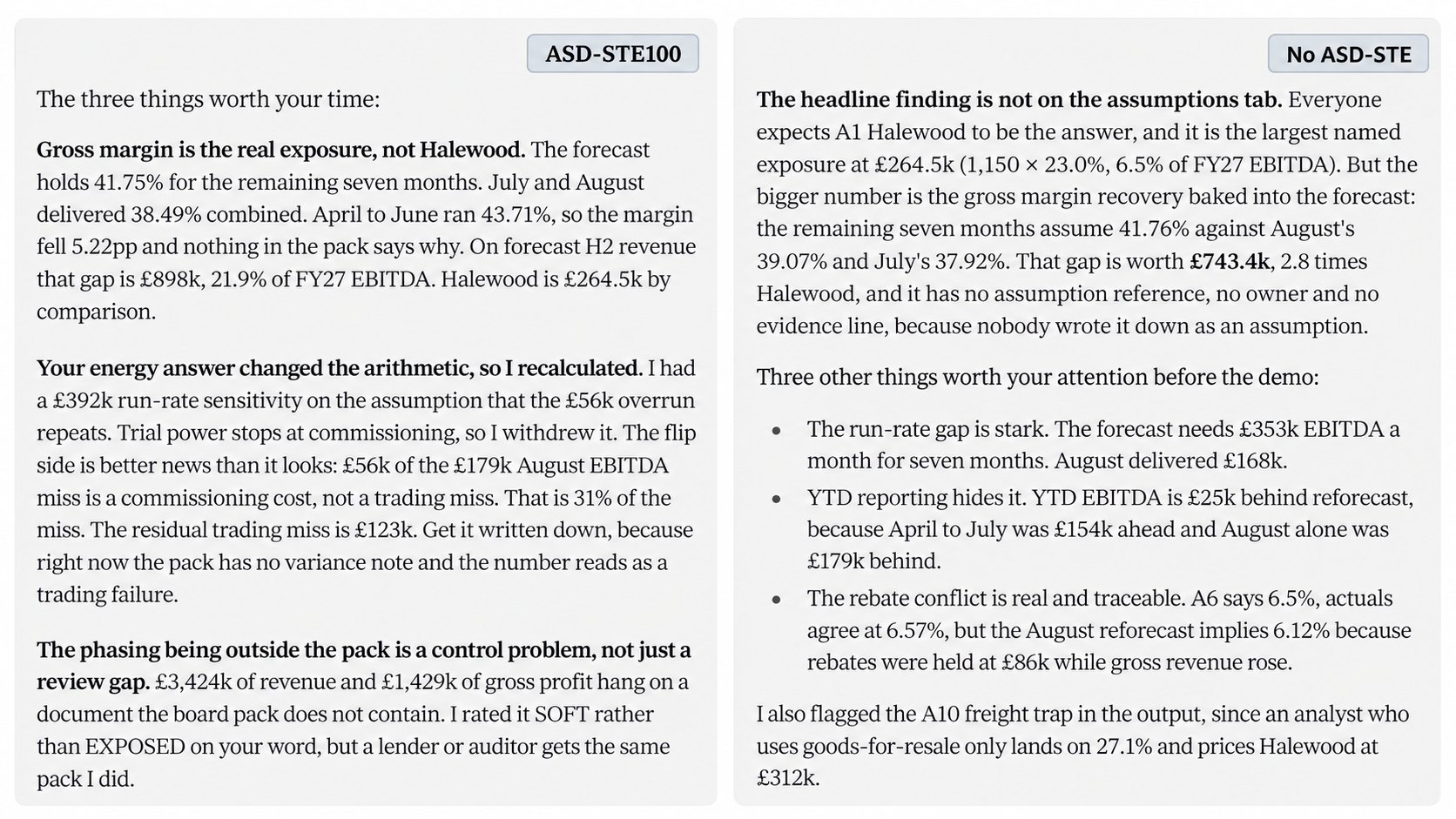
Here's the difference between the HTML outputs. Guess which one used ASD-STE100:
Where not to use it
Now, this is great for your own knowledge work but as you can imagine it kills creative content. If you're writing a poem, or a genuine email to a colleague, I probably would't use this.
I’m more selective when I want warmth, humour or a personal voice. For documents others will read, I’d use it to improve clarity, then check that the result still sounds natural.
Note: Ruben created a skill based on ASD-STE100 principles, which you can find in the link above, which I've started using and really like.
Try it out this week on a piece of work.
Try it out now by taking an AI answer you found hard to read and ask: “Rewrite this using ASD-STE100. Keep the key facts, assumptions and caveats.”
Timon